
Aviation
Photographing the Thunderbirds at Nellis Air Force Base
Six jets, a 210mm lens and a lot of sky to cover.
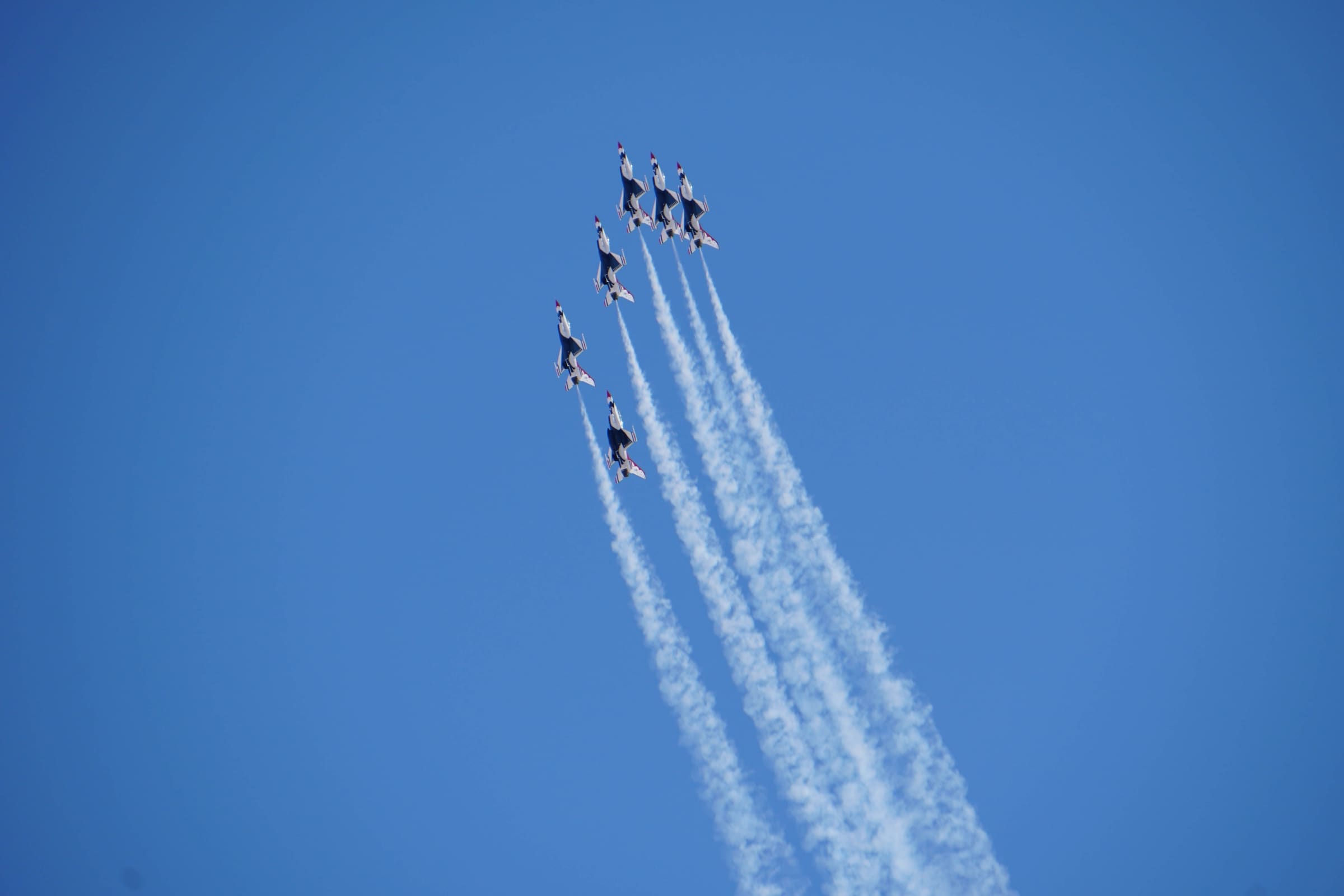
Six-Ship Delta Climbing Into Blue
The short version
Use the longest lens you have, continuous autofocus and burst mode. For jets, a shutter speed of 1/400 s or faster keeps them sharp; for helicopters and propeller planes, a slower shutter keeps some blur in the blades. My Thunderbirds frames were 1/400 s at f/7.1 to f/11 and ISO 100 to 125 at 210mm on a Sony a6500.
Nellis is the Thunderbirds' home
Nellis Air Force Base, on the northeast side of Las Vegas, is home to the U.S. Air Force Thunderbirds, so the team is a familiar sight here. Most of my aviation photos are from Aviation Nation weekend in April 2025, when the base hosted its air show on April 5 and 6 with a practice day on April 4. The rest are from April 2020, taken from a neighborhood near the base with rooftops in the foreground.
Show dates move around (the 2025 show was pushed back from 2024), so check the Nellis website rather than assuming it happens the same month every year.
Shutter speed: fast for jets, slower for blades
Jets don't have spinning parts you can see, so freeze them. I shot the Thunderbirds at 1/400 of a second, which was just fast enough at 210mm. If you are newer to panning or using a longer lens, start at 1/1000 and work down.
Helicopters and propeller planes are the opposite. Freeze them completely and the blades stop dead, which makes the aircraft look parked in midair. The HH-60 Pave Hawk went by at 1/500 s, which kept the airframe sharp but left a little blur in the rotor. For more blur, try 1/250 s or slower and pan smoothly with the aircraft.
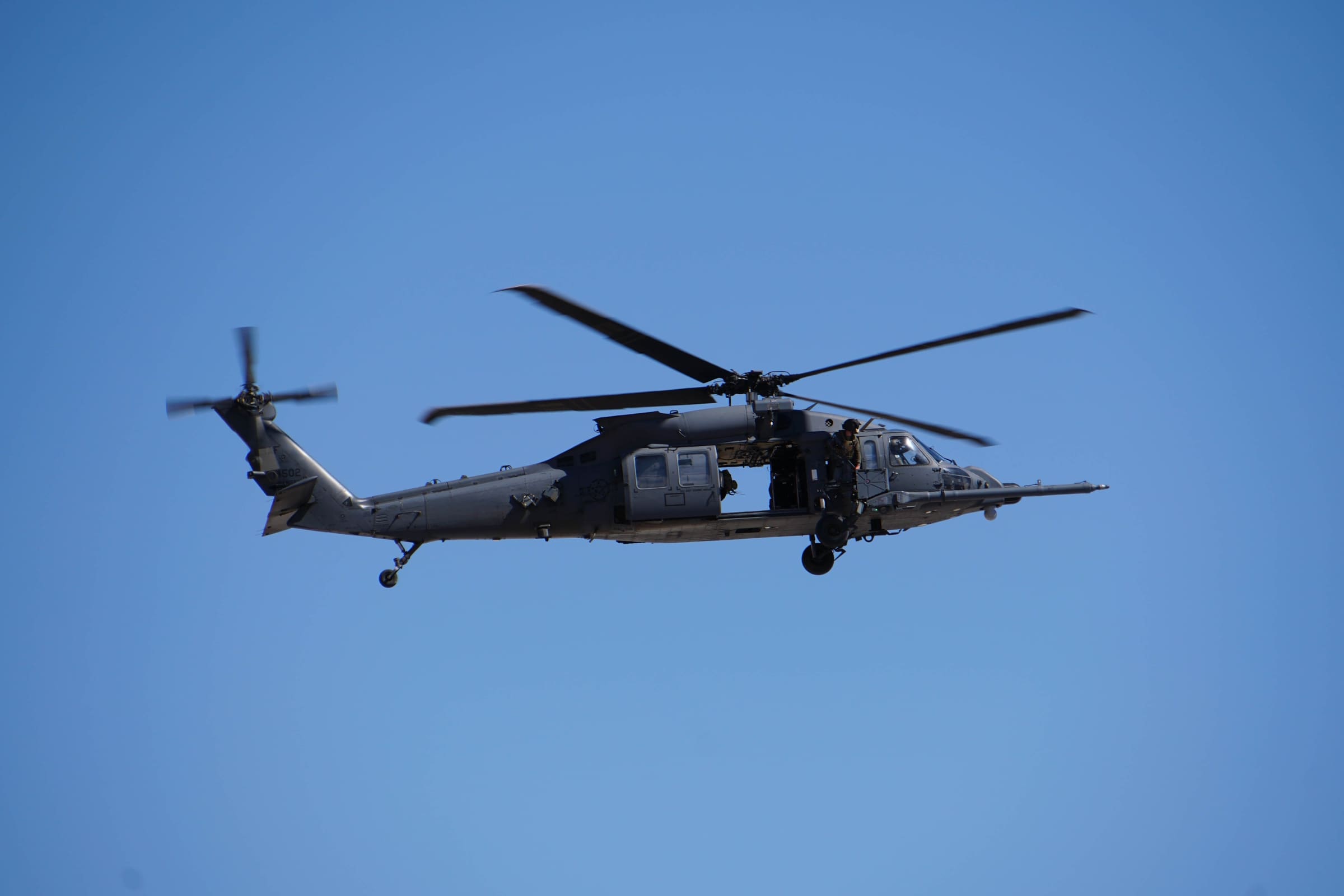
HH-60 Pave Hawk Flyby
The HH-60 Pave Hawk came by slow enough to fill the frame at 210mm, cabin door open with a crew member looking out. The 1/500s shutter froze the airframe but left a little blur in the rotor blades, which I actually prefer. See it in the collection
Autofocus and drive settings
- Focus mode: continuous (AF-C on Sony), with a wide or zone area so the camera can find a small jet against the sky.
- Drive: continuous high, in short bursts as the formation passes.
- Exposure: bright sky fools the meter into making the jets too dark. Add +0.7 to +1 stop of exposure compensation or set it manually. On a clear day I was at ISO 100 to 125, f/7.1 to f/11.
- Lens: as long as you have. At 210mm on a crop sensor, a single Thunderbird climbing away is still a small target, so leave room to crop.
Watch for the moments between the passes
The formation passes get all the attention, but some of my favorite frames are the in-between moments: a solo jet climbing straight up on a single column of smoke, three jets in a triangle with a pale daytime moon in the corner, and the F-22 popping its weapons bay doors open as it rolled by.
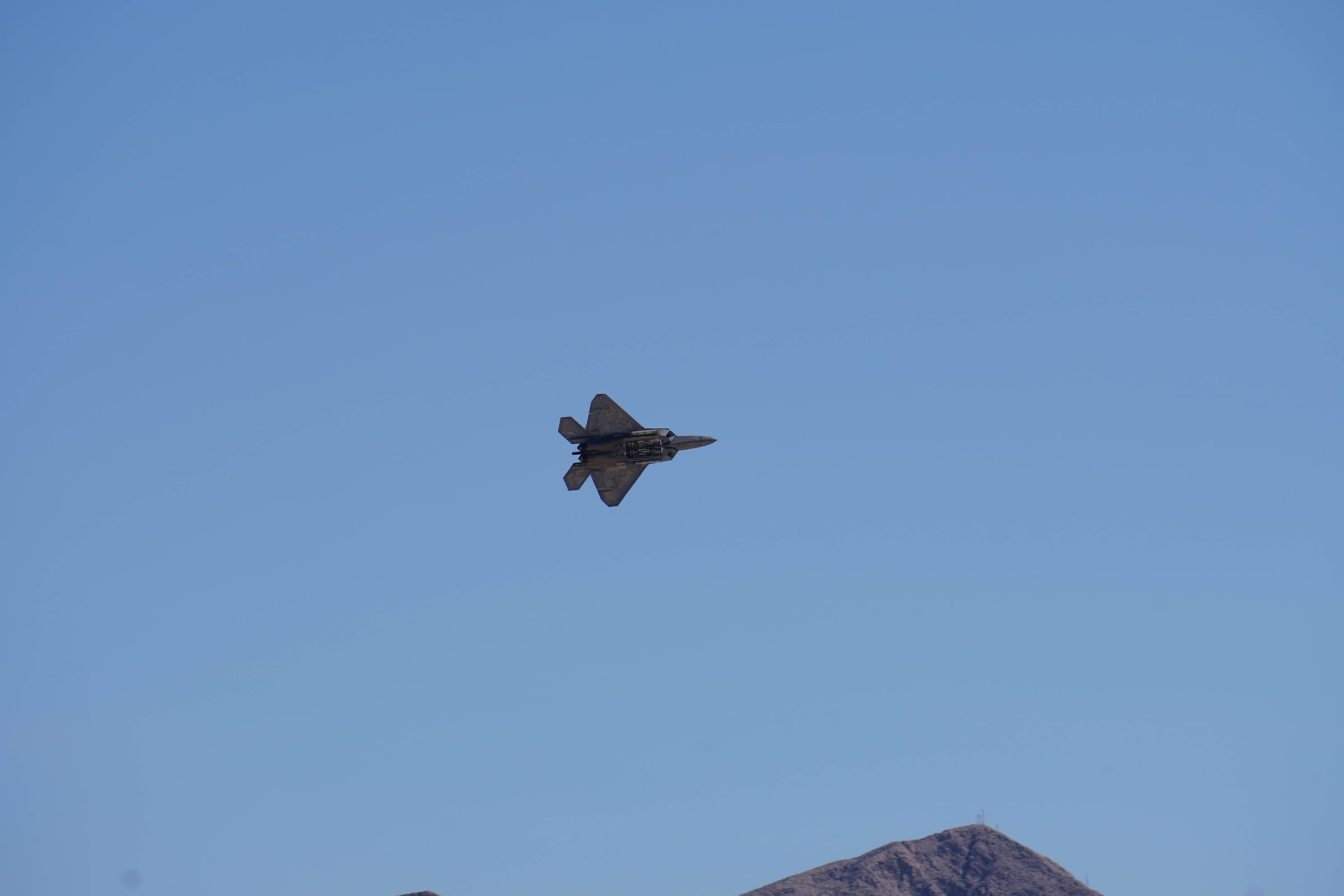
F-22 Raptor Weapons Bay Pass
The F-22 rolled up and popped its weapons bay doors open right as it went by. I was at 210mm on the a6500 at 1/400s, so the jet is small in the frame, but you can still make out the open bays. See it in the collection
The smoke and the mountains are part of the picture
The desert mountains around Las Vegas make a better backdrop than plain blue sky. Low passes along the ridgeline, smoke trails hanging over the valley and a few clouds give the photo a sense of place. My April 2020 frames have more mood in them than the clear-sky ones because of the clouds.
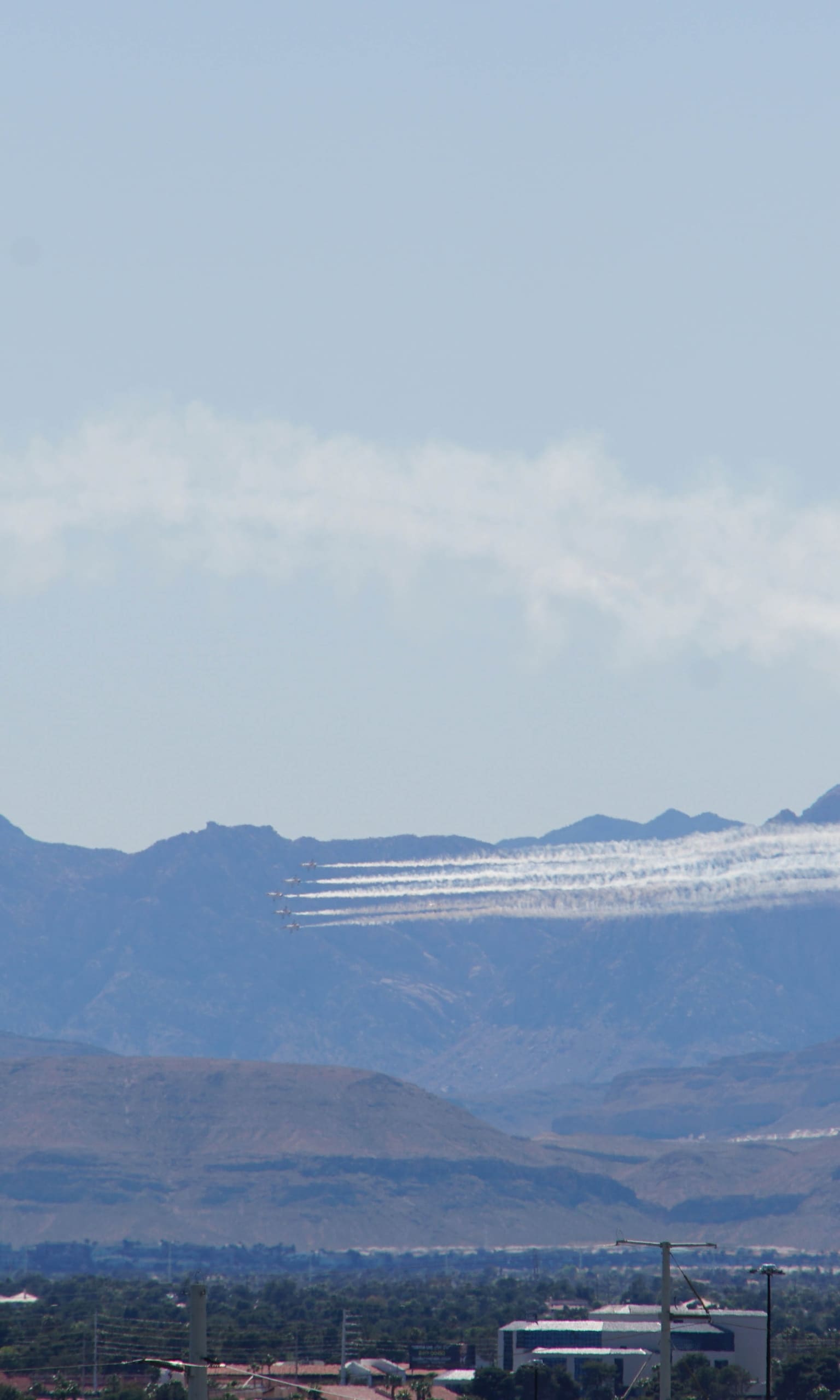
Thunderbirds Delta Skimming the Mountains
All six Thunderbirds in the delta formation running low along the mountains with the neighborhood rooftops in the foreground. What looks like leftover smoke from their earlier passes was still hanging in the sky. See it in the collection
What to bring
Ear protection, sunscreen, a hat, water and a spare battery. Burst shooting drains batteries fast and the Las Vegas sun is serious even in spring. Check the base's rules before you go, since military open houses limit what you can bring through the gate.
The settings behind these photos
| Photo | Focal length | Shutter | Aperture | ISO |
|---|---|---|---|---|
| Six-Ship Delta Climbing Into Blue | 210mm | 1/400s | f/8 | 125 |
| Solo Vertical Climb With Smoke Trail | 210mm | 1/400s | f/7.1 | 125 |
| Three Thunderbirds and the Daytime Moon | 210mm | 1/400s | f/6.3 | 125 |
| F-22 Raptor Weapons Bay Pass | 210mm | 1/400s | f/10 | 100 |
| HH-60 Pave Hawk Flyby | 210mm | 1/500s | f/8 | 100 |
| Thunderbirds Delta Skimming the Mountains | 200mm | 1/320s | f/10 | 100 |
Questions people ask
What shutter speed should I use for airshow photos?
For jets, 1/400 s at a minimum and 1/1000 s if you are still learning to pan. For helicopters and propeller aircraft, 1/250 s to 1/500 s keeps some blur in the blades.
Where are the Thunderbirds based?
Nellis Air Force Base in Las Vegas, Nevada, is home to the U.S. Air Force Thunderbirds.
When is the Aviation Nation air show at Nellis?
The dates vary. The 2025 show ran April 5 and 6, 2025, after being moved from 2024. Check the Nellis Air Force Base website for the current schedule.
Is a 200mm lens long enough for an airshow?
It works, especially on a crop-sensor camera, but the jets are small in the frame during high maneuvers. Low passes and formations fill it better, and you can crop the rest.

