
Night sky
Photographing the Moon (and the Sun) With a Zoom Lens
The moon is a sunlit rock. Expose it like one.
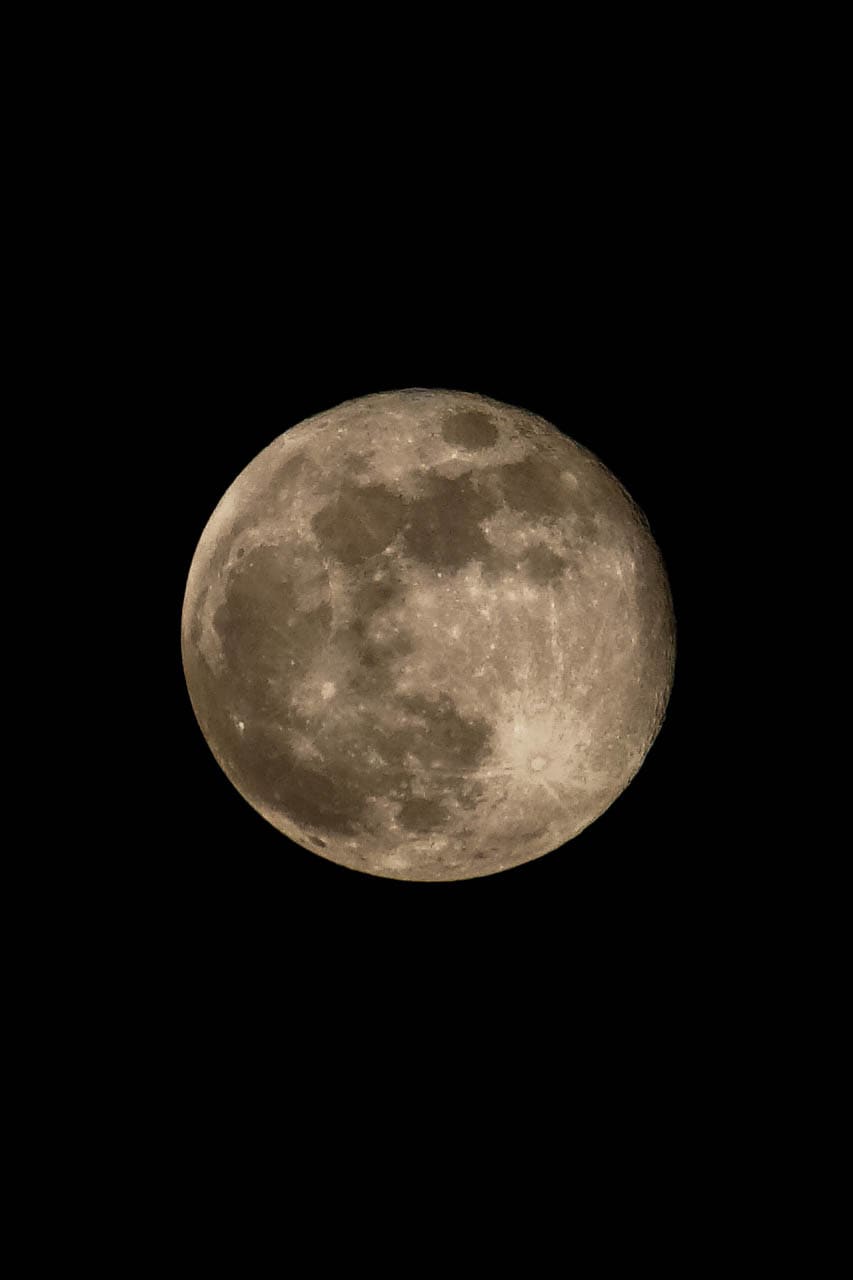
Golden Full Moon Against Black
The short version
Treat the moon like a daytime subject. Start with the Looney 11 rule (f/11 with a shutter speed of 1/ISO), use the longest focal length you have, focus manually and use a timer. My full moon was 1/800 s at f/6.3 and ISO 400 at 210mm. Never point a camera at the sun without a proper solar filter over the front of the lens.
Why your moon photos come out as a white blob
The moon is lit by direct sunlight, so it is far brighter than the night sky around it. If you leave the camera in auto, it sees a mostly black frame, brightens everything, and the moon turns into a glowing white circle with no craters. The fix is to set the exposure yourself.
Start with the Looney 11 rule
The Looney 11 rule says a full moon is correctly exposed at f/11 with a shutter speed of one over your ISO. At ISO 100 that is f/11 at 1/100 of a second. You can trade those around like any other exposure. My full moon was 1/800 s at f/6.3 and ISO 400, which lands within about half a stop of what the rule predicts. A faster shutter like that also helps at 210mm, where any shake shows.
Thinner phases are dimmer, so they need more light. My crescent was 1/20 s at f/11 and ISO 100. A shutter that slow at 210mm needs a solid tripod and a timer.
Shoot the crescent
A full moon is lit straight on, so it looks flat. A crescent is lit from the side, and the line between light and shadow, the terminator, is where every crater throws a shadow. If you want texture, shoot a few days either side of the new moon instead of on the night of the full moon.
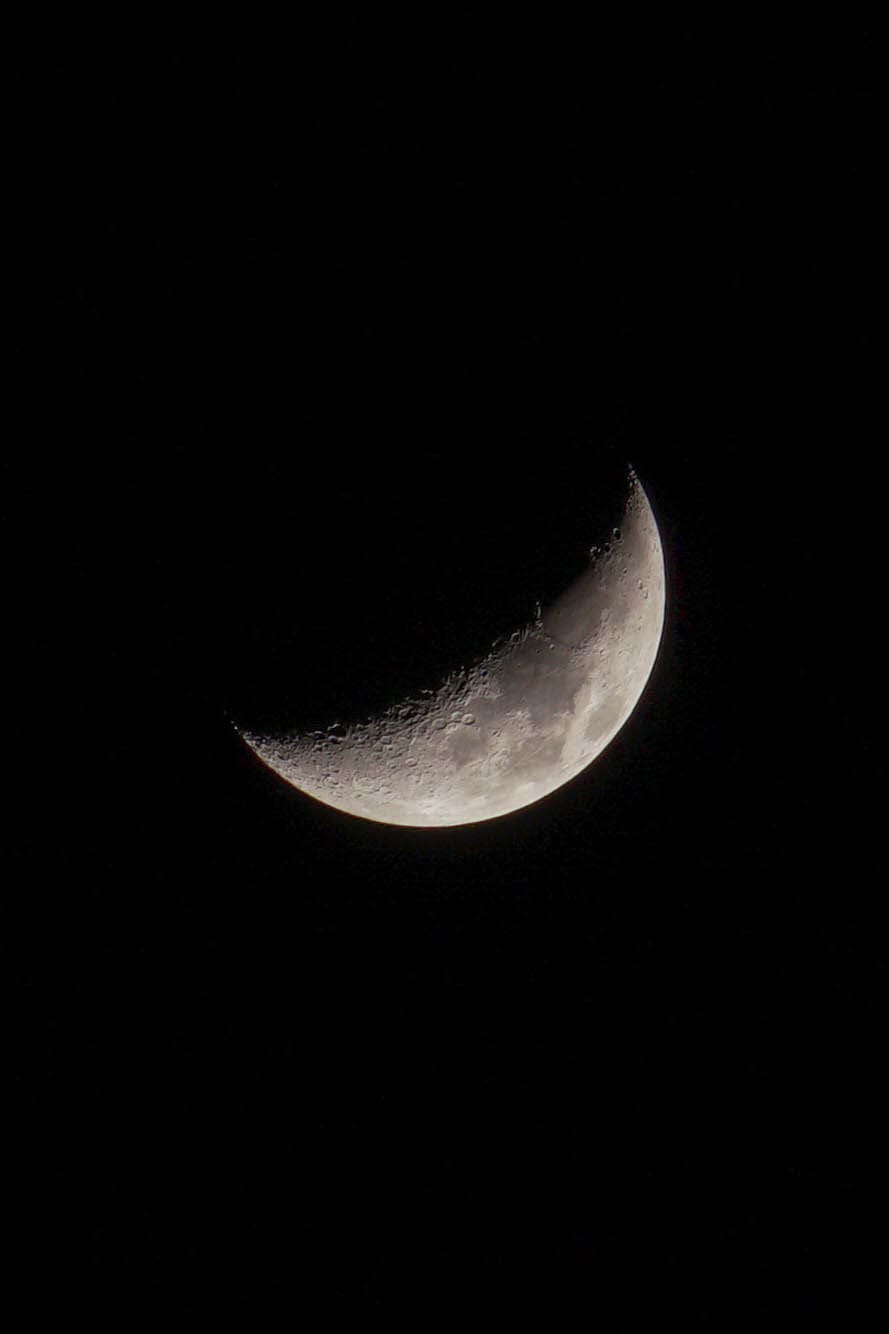
Crescent Moon Along the Terminator
The crescent moon at 210mm, 1/20s at f/11 and ISO 100. The terminator, where the sunlit side meets the shadow, is where all the crater detail lives, which is why a crescent often shows more texture than a full moon. See it in the collection
How much zoom do you need?
At 210mm on a crop-sensor camera like the a6500 (about 315mm in full-frame terms) the moon still only fills a small part of the frame. That's fine. Shoot at the camera's full resolution and crop afterward. A longer lens helps, but a 200mm-class zoom will show plenty of craters.
- Focus: manual, magnified on the edge of the moon or the terminator.
- Shake: tripod, two-second timer, stabilization off on the tripod.
- Air: the moon looks sharper high in the sky than near the horizon, where you are looking through more air and heat shimmer.
The sun: only with a solar filter
The one sun photo on this site was taken through a proper solar filter covering the front of the lens. The settings were 1/800 s at f/18 and ISO 6400 at 210mm, and a small sunspot showed up on the disc.
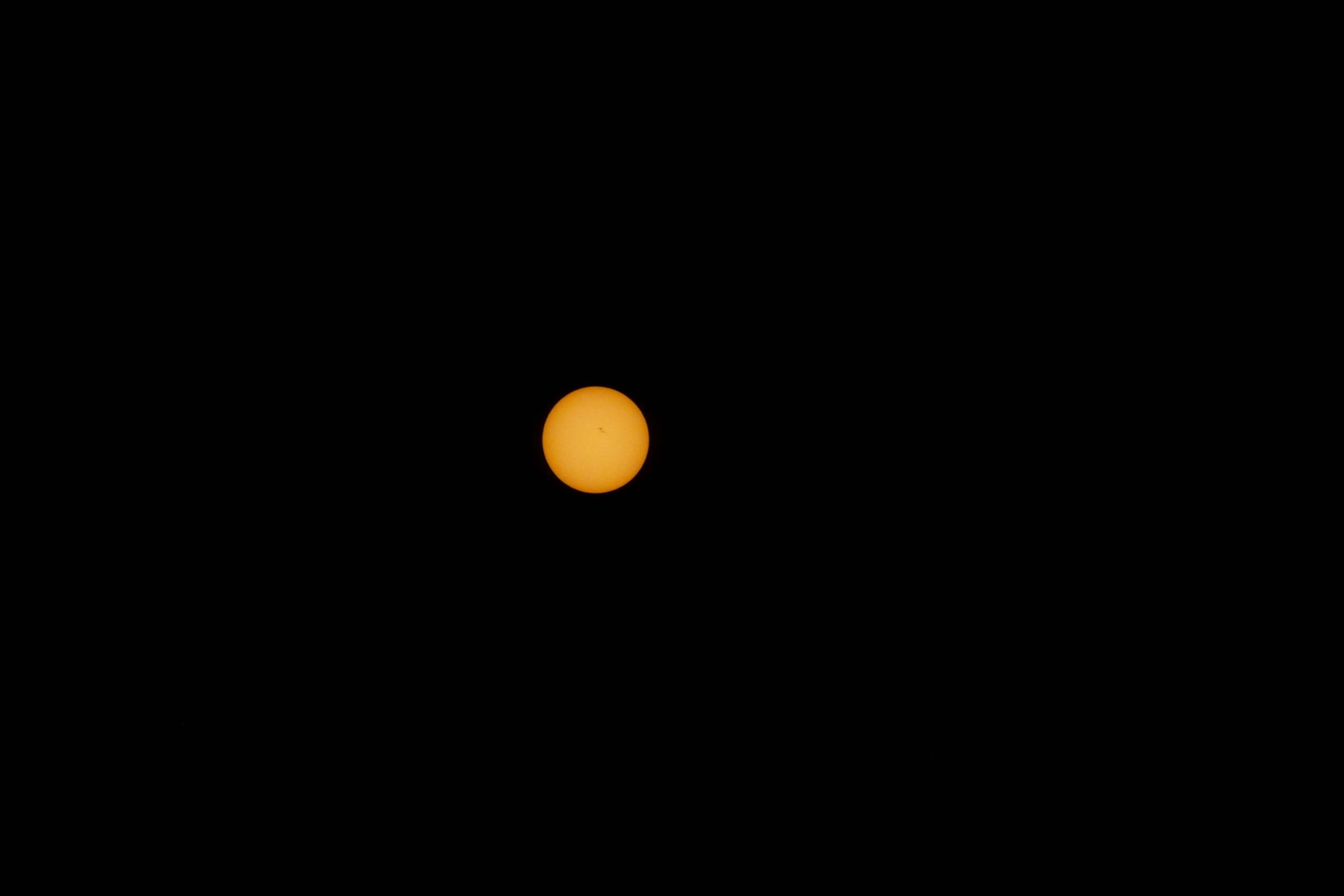
The Sun Through a Solar Filter
The sun through a solar filter on my a6500 at 210mm, 1/800s at f/18. Look closely and there's a small sunspot showing on the disc. See it in the collection
Safety: pointing a lens at the sun without a solar filter can damage the camera's sensor and, with an optical viewfinder, your eyes. Use a filter made for photographing the sun that covers the whole front of the lens, and never look at the sun through a camera, binoculars or a telescope without one.
The settings behind these photos
| Photo | Focal length | Shutter | Aperture | ISO |
|---|---|---|---|---|
| Golden Full Moon Against Black | 210mm | 1/800s | f/6.3 | 400 |
| Crescent Moon Along the Terminator | 210mm | 1/20s | f/11 | 100 |
| The Sun Through a Solar Filter | 210mm | 1/800s | f/18 | 6400 |
Questions people ask
What are the best camera settings for the moon?
Start with the Looney 11 rule: f/11 at a shutter speed of 1/ISO, for example f/11, 1/100 s and ISO 100 for a full moon. Thinner phases need a little more exposure.
Why does the moon look like a white blob in my photos?
Automatic exposure brightens the dark sky and overexposes the moon. Switch to manual and use daytime-like settings.
Is a crescent or full moon better to photograph?
A crescent or half moon usually shows more crater detail because side lighting along the terminator casts shadows. A full moon is lit straight on and looks flatter.
Can I photograph the sun with a regular camera?
Only with a proper solar filter over the front of the lens. Without one you risk damaging the sensor and your eyes.

